


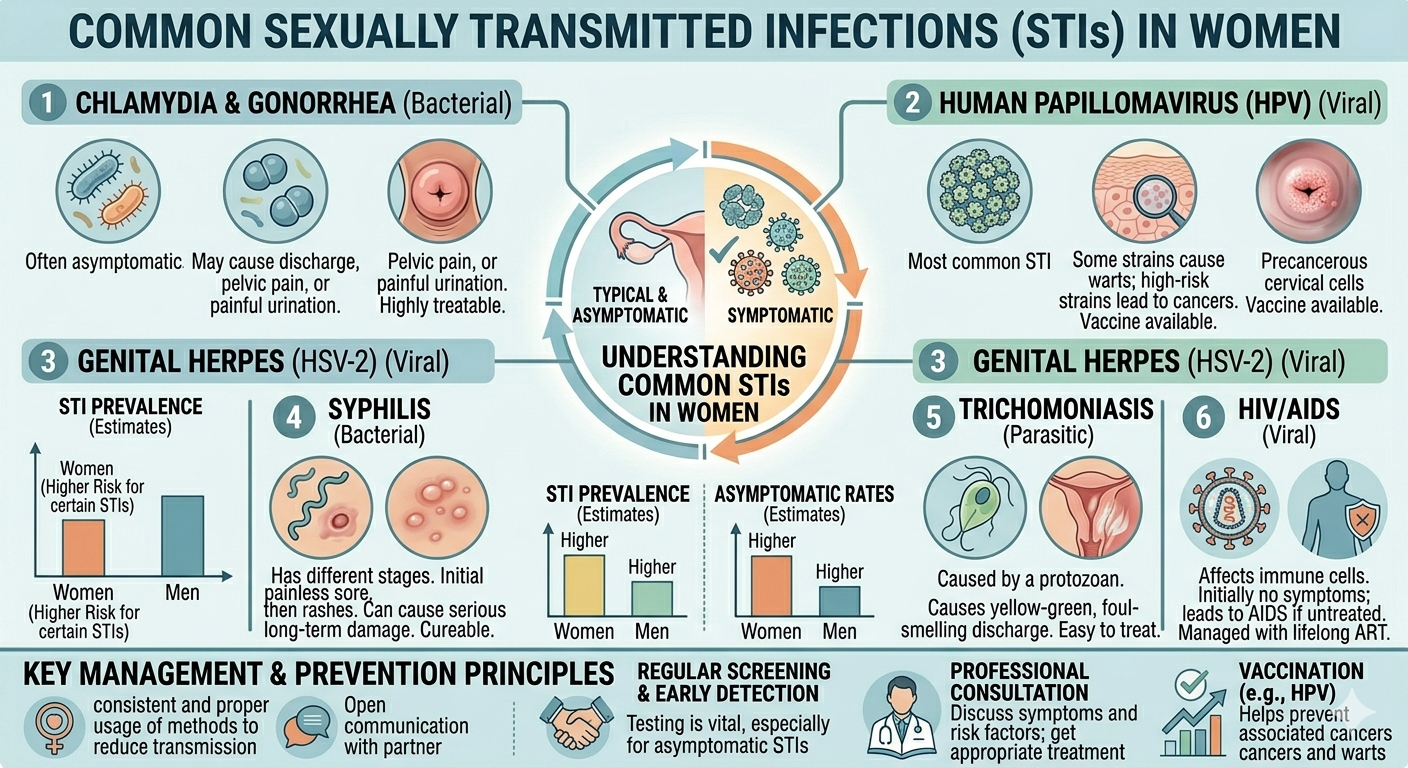
Sexually transmitted infections are still, a big issue for women’s health. A lot of them dont really show obvious signs right away, and if they are ignored, they can start causing serious complications, like pelvic inflammatory disease, trouble in getting pregnant, or even risks during pregnancy. So, awareness really matters, plus regular check-ups and quick action too. As education consultants focused on women’s health, we think it’s important to talk about these infections in a clear, and also factual way, because women can then take better care of themselves.
Understanding STIs and Why Women Need to Pay Special Attention
These infections usually pass from one person to another during vaginal, anal, or oral sex. They’re caused by bacteria, viruses, or parasites. While anyone can catch them, women often face more long-term trouble because of their reproductive system. An infection that starts in the cervix can quietly move up to the uterus and fallopian tubes, sometimes resulting in chronic pain or ectopic pregnancy.
A lot of women don’t notice any signs early on. When symptoms do show up, they might include unusual vaginal discharge, burning when you pee, pelvic pain, bleeding between periods, or sores in the genital area. The tricky part is that these symptoms can easily be confused with something simple like a yeast infection or UTI, which is exactly why professional help is important.
Chlamydia: The Sneaky One That Often Shows No Signs
Chlamydia it’s one of the really common STIs, across the world. It’s brought on by a bacterium know as Chlamydia trachomatis and it can take hold in the cervix, the rectum, or even the throat. Plenty of women manage to have it and not really notice much at all, but some do see signs like strange discharge, discomfort when peeing, or a mild kind of ache low in the abdomen.
If left untreated, it can develop into pelvic inflammatory disease (PID), which raises the chances of infertility and pregnancy problems later. The positive side is that antibiotics can clear it up completely when caught early. Doctors usually recommend regular screening for sexually active women under 25 and anyone with new or multiple partners.
Gonorrhea: Another Bacterial Infection to Watch For
Gonorrhea, sometimes still called “the clap,” is caused by the bacteria Neisseria gonorrhoeae. Women might see thick yellow or green discharge, feel pain while peeing, or notice spotting after sex, but plenty of cases have no symptoms at all.
Like chlamydia, it can also lead to PID and fertility issues. It’s common for both infections to occur together, so testing often covers both. Antibiotics work well, but some strains are becoming harder to treat, so getting care quickly is key.
Human Papillomavirus (HPV): Extremely Common and Sometimes Serious
HPV is probably the most widespread STI. Most sexually active people will come across it at some point. Some kinds can cause obvious genital warts, while others may creep into cervical cancer and other malignancies if they stay around.
The organism clears most HPV infections on its own, but if it doesn’t, the persistent ones need close monitoring.Vaccines give excellent protection against the highest-risk types, and regular Pap smears or HPV testing help catch any cell changes early. Prevention through vaccination has made a real difference here.
Genital Herpes: Lifelong but Controllable
Genital herpes is usually caused by herpes simplex virus type 2. It brings painful blisters or sores, especially during the first outbreak, which can also come with fever and body aches. Later outbreaks are generally milder, and many people have very subtle or no symptoms.
There’s no cure yet, but antiviral medicines help control outbreaks and lower the chance of passing it on. Talking openly with partners and using condoms (though they don’t cover every area of skin) are practical steps.
Trichomoniasis: The Parasite That Causes Noticeable Discomfort
Trichomoniasis, often shortened to “trich,” is caused by a parasite and tends to affect women more. It frequently produces a frothy, smelly discharge along with itching and irritation. Some women feel nothing at all, but untreated trich can make a person more vulnerable to other infections, including HIV.
Thankfully, a single course of antibiotics usually clears it. Both partners need treatment to stop it from bouncing back.
Syphilis and HIV: The Ones That Require Serious Attention
Syphilis starts with a painless sore and, if not treated, can affect the whole body over time. Blood tests catch it early, and antibiotics are very effective in the beginning stages. HIV is not curable but can be managed extremely well with today’s medicines. PrEP (pre-exposure prophylaxis) is also available for prevention if someone is at higher risk.
It’s worth remembering that having certain STIs can make it easier to catch HIV, so comprehensive screening is valuable.
Prevention, Screening, and When to Get Help
Good prevention includes using condoms consistently, limiting the number of partners, having honest conversations, and getting vaccinated for HPV and hepatitis B. Because so many infections stay silent, regular screening is one of the smartest things you can do.
If something feels off or you think you might have been exposed, it’s best not to wait. Consult with the Best Gynecologist in South Delhi for proper testing and advice. You can get the best treatment from a Gynecologist in South Delhi who will guide you through the right steps and help prevent any long-term issues.
In the end, knowing things honestly helps protect your health. Like just staying in the loop, getting screened when it is needed, and reaching out to a trusted doctor, it all really makes a big difference for managing these common infections, and keeping your reproductive health on track.

 English
 Arabic
 French
 Spanish
 Portuguese
 Deutsch
 Turkish
 Dutch
Dutch
 Italiano
 Russian
 Romaian
 Portuguese (Brazil)