


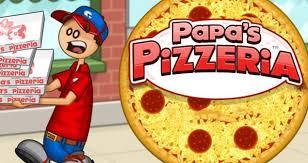
There’s a strange satisfaction in running a virtual pizza shop. Games like Papa’s Pizzeria aren’t flashy or high-tech—they don’t have sprawling worlds or complex narratives—but they have a way of pulling you in. What starts as a simple click-and-drag task quickly becomes a delicate juggling act, balancing orders, toppings, and oven timers. It’s stress, rhythm, and reward all wrapped into a surprisingly addictive loop.
The Hidden Complexity of Simple Gameplay
On the surface, Papa’s Pizzeria looks simple: take an order, spread sauce, add toppings, bake the pizza, and serve it. But underneath, there’s a lot going on. Each customer has patience, each topping has an order, and timing in the oven is critical. When multiple orders stack up, you’re suddenly managing a small system with competing priorities.
That’s where the subtle genius lies. Simple mechanics give the brain space to focus, but layering orders and time constraints introduces just enough challenge to make each shift feel engaging. You’re constantly thinking a few steps ahead, anticipating which pizza will burn first, which customer is about to leave, and how to maximize satisfaction. The complexity is emergent—it comes from combining simple rules, not adding complicated systems.
The Rhythm of Order Management
One of the most compelling aspects of these games is the rhythm they create. The first few orders are calm, but as the pace picks up, you start to internalize a pattern: spreading sauce while cheese melts, checking the oven timer while arranging toppings. There’s a cadence to the process that almost feels musical, a syncopation of clicks, drags, and timers.
When you hit that rhythm, the game becomes meditative. It’s stressful in the right way—the kind of stress that keeps your focus sharp—but also satisfying. Mistakes aren’t catastrophic, yet success feels earned. That balance is part of what makes these games linger in memory long after you’ve logged off.
If you’re curious about how rhythm and micro-timing affect player engagement, [internal link placeholder] explores similar mechanics in casual games.
Micro-Systems That Keep You Hooked
What’s fascinating about Papa’s Pizzeria is how small gameplay systems create habits. Each topping has an optimal order, each oven timer has a sweet spot, and customers’ moods give immediate feedback. Over time, players develop mental shortcuts and instinctive workflows.
This is a form of operant conditioning. Players learn to repeat behaviors that produce satisfying outcomes: perfect pizzas, happy customers, high scores. Even small rewards—the occasional tip, a compliment from a virtual customer, a streak of perfect orders—reinforce engagement. The simplicity allows these micro-systems to shine, making the game both approachable and habit-forming.
For more on how subtle systems build lasting engagement, check out [internal link placeholder].
Nostalgia and the Charm of Browser Games
For many players, part of the appeal is nostalgia. Browser-based restaurant games like Papa’s Pizzeria evoke a particular era: afternoons spent clicking away at a simple, colorful interface, a sense of accomplishment measured in points rather than achievements or collectibles.
That nostalgia isn’t just sentimental—it also shapes how we engage with the game. The casual, forgiving environment allows us to relax and enjoy the mechanics without worrying about failure in the real world. It’s a gentle reminder that games don’t need to be complex to be satisfying. The charm lies in rhythm, timing, and the quiet rewards of doing something well.
Stress, Satisfaction, and Small Victories
Part of the thrill of Papa’s Pizzeria comes from managing stress in a safe space. Orders pile up, the oven timer ticks down, and customers get impatient—but all consequences are contained. A burnt pizza or forgotten topping may cost points, but it’s also a learning moment. That tension, followed by moments of perfection, makes the payoff unexpectedly intense.
Completing a shift flawlessly—serving multiple orders in succession without error—feels like mastery. There’s satisfaction not from narrative or visuals, but from skill, rhythm, and focus. It’s a subtle, yet profound, kind of gaming high that keeps casual players coming back.
The Allure of Small, Well-Designed Games
Games like Papa’s Pizzeria remind us that engagement doesn’t require complexity. Small systems, instant feedback, and emergent challenge are enough to create deeply satisfying experiences. There’s a tactile joy in managing orders, a quiet thrill in perfect timing, and a lingering sense of accomplishment at the end of a shift.
Even years later, these games can pull players back—not because they’re flashy or revolutionary, but because they hit a fundamental human enjoyment: small, achievable challenges that reward focus, rhythm, and precision. The pleasure is subtle, but it’s enduring.

 English
 Arabic
 French
 Spanish
 Portuguese
 Deutsch
 Turkish
 Dutch
Dutch
 Italiano
 Russian
 Romaian
 Portuguese (Brazil)