


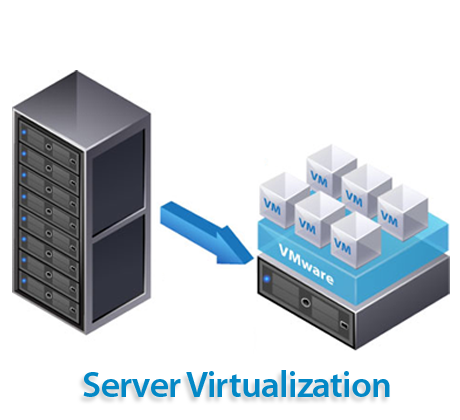
Modern Server Virtualization allows multiple virtual machines to run on a single physical server, improving hardware utilization and operational flexibility. By abstracting compute resources through a hypervisor, organizations can provision servers faster, reduce data center footprint, and simplify workload mobility. Virtualization enables features such as live migration, snapshots, and high availability, which improve resilience and reduce downtime during maintenance. It also supports standardized templates and automation, enabling IT teams to deploy environments quickly and consistently. Server virtualization has been central to private cloud and hybrid infrastructure strategies for years, and it remains important even as containers and Kubernetes grow. Many enterprise applications still run best on VMs, especially legacy systems that require full OS environments. However, virtualization success depends on correct sizing, storage and network design, and strong governance. Over-provisioning VMs or poor capacity planning can reduce benefits. When implemented with disciplined operations, virtualization becomes a foundational infrastructure layer that enables faster IT service delivery with lower hardware cost.
A virtualization stack includes physical hosts, a hypervisor layer, management tools, and shared storage and networking. Hypervisors allocate CPU, memory, storage, and network resources to VMs, enforcing isolation while allowing shared use of hardware. Management platforms provide centralized control for provisioning, patching, and monitoring across clusters. Shared storage supports VM mobility and high availability, while software-defined networking can simplify segmentation and automation. Backup and disaster recovery tools integrate at the hypervisor level, enabling image-based backups and faster restores. Automation and infrastructure-as-code can standardize VM builds and reduce configuration drift. Virtualization also improves test and development by enabling quick cloning and sandbox environments. Yet operational discipline matters. VM sprawl can occur when provisioning is too easy, increasing cost and management burden. Licensing and support costs also influence the economics. Security must be managed across hosts and VMs, including patching and access control. Monitoring is necessary to detect resource contention, storage latency, and network bottlenecks. Successful programs align virtualization with workload requirements and implement governance to keep environments clean and efficient.
Virtualization also supports business continuity. High availability clusters can restart VMs automatically if a host fails. Live migration enables maintenance without downtime, improving operational resilience. Disaster recovery strategies can replicate VM images to secondary sites or cloud environments, improving recovery time objectives. Virtualization simplifies hardware refresh cycles, because workloads can be moved between hosts without reinstalling OS and applications. This flexibility supports faster modernization and reduces vendor lock-in at the hardware layer. However, virtualization introduces shared-risk components: if management systems, storage, or networking fail, many VMs can be affected. Therefore, architecture design and redundancy are important. Security risks include hypervisor vulnerabilities and misconfigured management access. Strong RBAC, segmentation, and logging mitigate these risks. Organizations also must manage performance; some workloads require careful tuning or may be better suited to bare metal or specialized hardware. A mature virtualization environment includes capacity planning, performance baselines, and standardized operating procedures.
Looking ahead, server virtualization will continue evolving alongside containers and cloud. Many organizations will run mixed environments: VMs for legacy and stateful workloads, containers for cloud-native apps. Virtualization platforms are increasingly integrating Kubernetes and automation features, blending VM and container management. Hybrid cloud strategies will also keep virtualization relevant as enterprises connect on-prem clusters with cloud services. Edge deployments may use virtualization for consistent compute at remote sites. Security and compliance requirements will drive stronger segmentation, encryption, and auditing in virtual environments. Cost governance will remain important, especially as licensing models change. The long-term role of server virtualization is stable: it remains a proven way to consolidate infrastructure, increase agility, and improve resilience. Organizations that manage it with disciplined governance and automation will continue to benefit from reduced hardware costs and faster, more reliable infrastructure operations.
Top Trending Reports:
Advanced Television Systems Committee Broadcast Systems Service Market

 English
 Arabic
 French
 Spanish
 Portuguese
 Deutsch
 Dutch
Dutch
 Italiano
 Russian
 Romaian
 Portuguese (Brazil)
 Tiếng Việt